About this video
When to Use 3D Printing Infill Patterns
Choosing the right infill pattern is one of the most important decisions when setting up your 3D prints. Different infill types affect strength, material consumption, and print time in unique ways.
Infill Patterns for Strength
Gyroid Infill
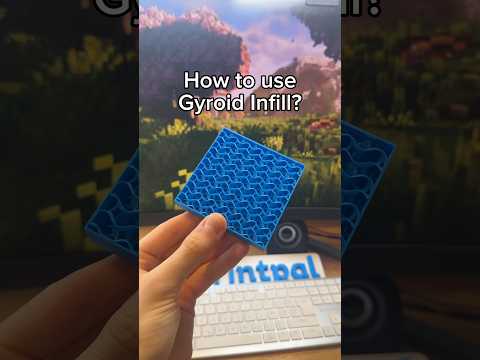
Gyroid is an excellent choice when you need a balance of strength and flexibility. This wave-like pattern allows for better filament distribution and works exceptionally well with flexible materials like TPU. It provides good impact resistance while maintaining some flex.
Honeycomb Infill
For maximum structural strength, honeycomb is the go-to pattern. The hexagonal structure distributes weight and stress evenly throughout your print. Use honeycomb for functional parts, brackets, and load-bearing components that need to withstand significant force.
Efficient Infill Patterns
Rectilinear Infill
Rectilinear offers solid strength while using less material than many other patterns. This makes it ideal for general-purpose prints where you want decent durability without excessive filament consumption. It's a reliable default option for everyday 3D printing projects.
Special Purpose Infill Patterns
Archimedean Chords Infill
Archimedean chords creates a pattern specifically designed for filling cavities. If you want to fill your 3D model with materials like sand, rice, or dry media, this pattern creates the necessary channels and spaces for even distribution.
Octagram Star Infill
Octagram star patterns work well for liquid filling applications and offer aesthetic benefits. The geometric design creates visually interesting cross-sections that can be desirable for decorative prints where the internal structure may be partially visible.
Tips for Choosing Infill
- Match infill pattern to your print's purpose
- Consider infill density alongside pattern selection
- Higher density doesn't always mean better strength
- Test different patterns on similar projects to find your preference
Frequently Asked Questions
What is the strongest 3D printing infill pattern?
Honeycomb is widely considered the strongest infill pattern due to its hexagonal structure that distributes stress evenly.
Which infill uses the least material?
Rectilinear and cubic patterns typically use less material while still providing adequate strength for most prints.
Can I use gyroid infill for flexible materials?
Yes, gyroid is particularly well-suited for TPU and other flexible filaments due to its flexible lattice structure.
Conclusion
Understanding when to use each infill pattern helps you optimize your prints for strength, material efficiency, and special applications. Start with rectilinear for general use, switch to honeycomb for functional parts, and use gyroid for flexible materials.