How the 3D printer finder works
Most "best 3D printer" lists give you ten machines and leave the choosing to you. This quiz does the choosing. It asks five plain-English questions, then follows the same path an experienced maker would use when a friend asks which 3D printer to buy.
- Pick what you want to make. Toys and gifts, useful parts for the house, miniatures, big cosplay pieces, or nothing specific yet.
- Set your budget. Choose $300 or less, $300 to $550, $550 to $1,000, or over $1,000 for the printer itself.
- Decide on color. Say whether you want more than one color in a single print, now or later.
- Say where it will live. A room shared with people, kids or pets points you to an enclosed printer.
- Tinker or just print. Choose whether you want to upgrade and swap parts, or want a printer that just works.
- Get your match. See the printer that fits you best, why it fits, its biggest trade-off and two alternatives.
If one answer pushes you past your budget, for example wanting color for under $300, the result says so, tells you how far over it is, and shows the best option that stays inside your budget.
Best 3D printers for beginners in 2026, compared
Every printer the quiz can recommend, with approximate US prices checked in October 2026. Prices move a lot, especially around sales, so treat them as a guide.
| Printer | Approx. price | Type | Build volume | Colors | Best for |
|---|---|---|---|---|---|
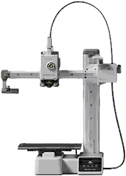 Bambu Lab A1 mini |
$199 | Open frame | 180 × 180 × 180 mm | 1, or 4 with AMS lite | Desks, dorm rooms and kids |
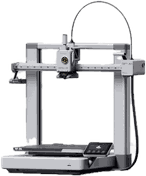 Bambu Lab A1 |
$259 | Open frame | 256 × 256 × 256 mm | 1, or 4 with AMS lite | Most first-time buyers |
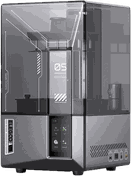 Elegoo Mars 5 Ultra |
$259 | Resin (MSLA) | 153 × 78 × 165 mm | 1 (resin) | Tabletop miniatures |
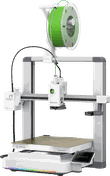 Creality SparkX i7 |
$279 | Open frame | 260 × 260 × 255 mm | 1, or 4 with CFS Lite | Tinkerers on a budget |
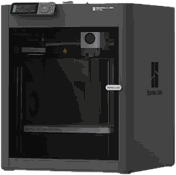 Bambu Lab P1S |
$349 | Enclosed | 256 × 256 × 256 mm | 1, or 4 to 16 with AMS | Homes with kids and pets |
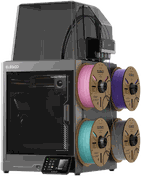 Elegoo Centauri Carbon 2 Combo |
$399 | Enclosed | 256 × 256 × 256 mm | 4 with the included CANVAS | Enclosed color for less |
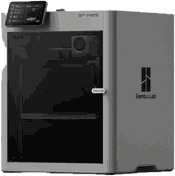 Bambu Lab P2S |
$449 | Enclosed | 256 × 256 × 256 mm | 1, or 4+ with AMS 2 Pro | A newer, smarter P1S |
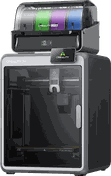 Creality K2 Combo |
$521 | Enclosed | 260 × 260 × 260 mm | 4, up to 16 with more CFS | Color in a shared room |
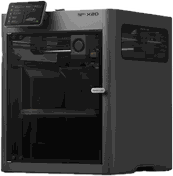 Bambu Lab X2D |
$589 | Enclosed, 2 nozzles | 256 × 256 × 260 mm | 2 nozzles, more with AMS 2 Pro | Color in a living space |
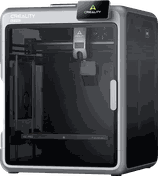 Creality K2 Pro |
$599 | Enclosed | 300 × 300 × 300 mm | 1, or 4 to 16 with CFS | Bigger prints, one color |
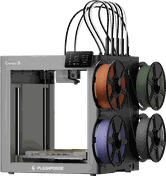 Flashforge Creator 5 |
$699 | Open, 4 tool heads | 256 × 256 × 256 mm | 4 tool heads | Waste-free color |
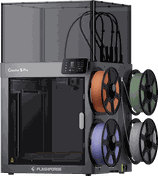 Flashforge Creator 5 Pro |
$849 | Enclosed, 4 tool heads | 256 × 256 × 256 mm | 4 tool heads | Waste-free color, enclosed |
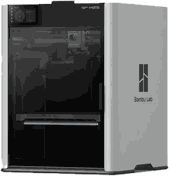 Bambu Lab H2S |
$1,049 | Enclosed | 340 × 320 × 340 mm | 1, or 4 to 24 with AMS | Big, tough parts |
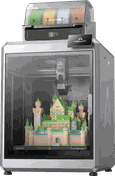 Creality K2 Plus Combo |
$1,199 | Enclosed | 350 × 350 × 350 mm | 4, up to 16 with more CFS | Huge prints in color |
Build volume is the biggest part a printer can make in one go, in millimeters (width × depth × height). 256 mm is about 10 inches.
The best 3D printer for your budget
Best 3D printer under $300
The Bambu Lab A1 (about $259) is the easiest full-size printer to start with. It calibrates itself and prints PLA, PETG and TPU on a 256 mm bed. If you like to tinker, the Creality SparkX i7 (about $279) has a tool-free quick-swap hotend and a slightly bigger 260 mm bed. Short on space? The Bambu Lab A1 mini (about $199) is a desk-size version with a 180 mm bed.
Two things are hard to find under $300: an enclosure and full-size color. The A1 mini Combo (about $299) prints four colors, but only on a small, open bed. That is why the quiz steps you up a budget window when you ask for color or a shared room.
Best 3D printer under $550
This is the sweet spot. The Bambu Lab P1S (about $349) adds a full enclosure for homes with kids and pets, and prints ABS and ASA for outdoor parts. For color, the Creality K2 Combo (about $521) comes with a four-spool CFS box and an enclosed 260 mm chamber. The Elegoo Centauri Carbon 2 Combo (about $399) is one of the cheapest enclosed four-color printers you can buy, and the Bambu Lab P2S (about $449) is the newer, smarter version of the P1S.
Best 3D printer under $1,000
For color in a shared room, the Bambu Lab X2D (from about $589) prints two colors with its two nozzles and cleans the air with HEPA and carbon filters. In a garage or workshop, the Flashforge Creator 5 (about $699) swaps between four separate print heads, so color prints waste almost no filament. If one color is enough, the Creality K2 Pro (about $599, or $799 as a Combo with the CFS) gives you a 300 mm build volume and a heated chamber.
Best 3D printer over $1,000
The Bambu Lab H2S (about $1,049) has a 340 × 320 × 340 mm build volume, a 350 °C hotend and a heated chamber for engineering plastics. The Creality K2 Plus Combo (about $1,199) goes even bigger at 350 mm in every direction and includes a four-color CFS. Either one prints a full-size helmet in one piece.
Do you need a multicolor 3D printer?
Most multicolor printers use one nozzle and an automatic spool changer. Bambu Lab calls it the AMS, Creality the CFS and Elegoo the CANVAS. When the color changes, the printer cuts the filament, loads the next spool and purges the old color into a small waste pile. It works well, but it adds time and wastes some filament on prints with lots of color changes.
Tool changers like the Flashforge Creator 5 and dual-nozzle printers like the Bambu Lab X2D switch between separate nozzles instead, so they waste far less. If you are not sure you want color, pick a printer that can add a color unit later. Every single-color pick in this quiz can. Our multicolor 3D printing guide covers the details.
Open or enclosed: where should a 3D printer live?
A filament printer heats its nozzle to around 200 to 300 °C and moves for hours at a time. Open printers are cheaper and work well in a garage, workshop or spare room. In a living room, bedroom, or anywhere kids and pets can reach, an enclosed printer keeps hands and paws away from hot and moving parts, cuts down on noise, and holds in heat for materials like ABS and ASA.
Every 3D printer gives off some fumes and fine particles while it prints, more with ABS and ASA than with PLA. Printers like the Bambu Lab X2D and H2S filter the air inside the chamber, and it is worth printing in a room you can ventilate either way. The 3D printing safety guide explains what matters.
Tinker or just print?
Some people love adjusting, upgrading and swapping parts. Others want a printer that behaves like a microwave. Bambu Lab printers lean toward the appliance side: they calibrate themselves and the software does a lot for you. Creality's SparkX i7 and K2 series have tool-free quick-swap nozzles and plenty of add-ons, and a tool changer like the Flashforge Creator 5 is a fun machine to learn on. Either way, every printer on this page levels its own bed, so nobody has to fiddle with a sheet of paper and four knobs anymore.
Resin or filament for your first printer?
Filament (FDM) printers make the toys, gifts, fixes and big parts most people want, and they are the cleaner, more forgiving way to start. Resin printers like the Elegoo Mars 5 Ultra (about $259) print far finer detail, which is why tabletop gamers love them for miniatures. They also need gloves, isopropyl alcohol for washing, ventilation and a spot kids and pets can't reach. Read resin vs FDM 3D printing for the full comparison.
What else to buy with your first 3D printer
- One or two 1 kg spools of PLA, about $20 each. PLA is the easiest plastic to print. See the PLA guide.
- Flush cutters for trimming filament and supports.
- Isopropyl alcohol (90% or stronger) and paper towels for cleaning the build plate.
- A plastic scraper and a cheap pair of digital calipers for measuring things you want to replace.
The beginner's guide to FDM 3D printing walks through setup and your first print, and the 3D print cost calculator shows what each print really costs once you are up and running.
Frequently asked questions
What is the best 3D printer for beginners in 2026?
For most beginners, the Bambu Lab A1 (about $259) is the easiest place to start: it calibrates itself, prints quietly and has a full-size 256 mm bed. If the printer will share a room with kids or pets, the enclosed Bambu Lab P1S (about $349) is the safer pick. If you want color from day one, the Creality K2 Combo (about $521) includes a four-color system and an enclosure.
How much should I spend on my first 3D printer?
Between $250 and $550 buys an excellent first printer in 2026. Under $300 gets you a capable open printer such as the Bambu Lab A1 or Creality SparkX i7. Around $350 to $550 adds an enclosure or four-color printing. Budget another $40 or so for two spools of filament and a few basic tools.
Which 3D printer is best for a home with kids or pets?
Choose an enclosed printer, so the hot nozzle and moving parts sit behind doors. The Bambu Lab P1S (about $349) is the most affordable enclosed pick here, the Creality K2 Combo (about $521) adds four colors, and the Bambu Lab X2D (from about $589) adds HEPA and carbon air filtration. Print PLA, keep the room ventilated and supervise young children.
Is a multicolor 3D printer worth it for a beginner?
It is if color is what excites you. Four-color prints come off the printer finished, with no painting. The trade-offs are a higher price, slower prints and some wasted filament with each color change. If you are unsure, buy a printer that can add a color unit later, such as the Bambu Lab A1 with the AMS lite.
Should I buy the Bambu Lab A1 or the P1S?
Buy the A1 (about $259) if the printer will sit in its own space and you mostly print PLA and PETG. Buy the P1S (about $349) if it will live where people, kids or pets spend time, or if you want to print ABS and ASA for outdoor parts. Both have a 256 mm build volume and can add a four-spool color unit.
Bambu Lab or Creality: which is better for beginners?
Both make excellent beginner printers in 2026. Bambu Lab printers feel more like appliances, with very polished software and the MakerWorld model library built in. Creality printers such as the SparkX i7 and the K2 series often give you more build volume or color for the money, plus tool-free swappable parts for people who like to tinker.
How big a 3D printer do I need?
A 256 mm (about 10 inch) build volume handles almost everything a beginner prints. Full-size cosplay helmets usually need around 300 mm, which the Creality K2 Pro, Bambu Lab H2S and Creality K2 Plus offer. Anything bigger can be cut into parts and glued together, and PrintPal's free 3D Model Splitter does the cutting for you.
Should my first 3D printer be resin?
Usually not. Filament printers are cleaner, safer around the house and print the useful, large and colorful things most people want. Resin is the better choice if you mainly want tabletop miniatures or tiny detailed figures and have a ventilated space for it.
How up to date are these recommendations?
The picks and prices were last checked in October 2026 using official US store prices. Printers go on sale often, so check the current price before you buy.
Still deciding?
Take the quiz. It takes about 30 seconds, and you can change any answer on the result page to see how the pick changes.
Find my printer