- How it works
- Filament chart
- PLA vs PETG
- Outdoors and cars
- Strong parts
- Flexible
- Cosplay
- Nozzles and drying
- FAQ
How the filament finder works
There are dozens of filament types, and most guides list all of them and leave the choosing to you. This quiz does the choosing. It asks five plain-English questions and follows the same path an experienced maker would use when a friend asks which filament to buy.
- Say what you are making. Decor and gifts, useful things for the house, strong mechanical parts, something bendy, or cosplay and props.
- Say where it will live. Indoors, somewhere hot like a car or a sunny window, outside in the sun and rain, or near water.
- Pick a finish. A plain color, matte, shiny silk, or something special like wood, marble or glow in the dark.
- Tell us about your printer. Open, enclosed, or no printer yet. ABS, ASA, nylon and PC need an enclosure.
- Choose how much fuss is OK. Keep it easy, allow a little tuning, or take on engineering filaments that need drying and special nozzles.
- Get your filament. See the best filament type for your project, starter settings, spools worth buying and two alternatives.
If the best filament for the job needs something you don't have, like an enclosure for ASA, the result says so and shows the best option that works on your setup.
3D printer filament types compared
Every filament type the quiz can recommend, rated from 1 to 5. Heat is how well a part keeps its shape when it gets warm: PLA softens at about 55 °C, PETG at about 70 °C, ABS and ASA at around 90 to 100 °C, PC above 110 °C and carbon fiber nylon well above 150 °C.
| Filament | Ease | Strength | Heat | Outdoors | Flex | Needs | Best for |
|---|---|---|---|---|---|---|---|
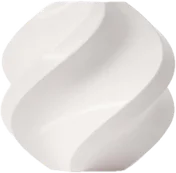 PLAPolylactic acid |
Nothing special | Decor, toys, gifts, prototypes | |||||
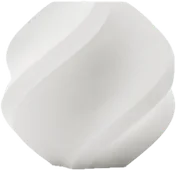 Matte PLAPLA with a matte finish |
Nothing special | Display pieces, figures, cosplay | |||||
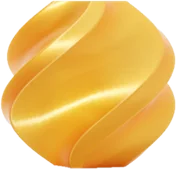 Silk PLAPLA with a glossy, metallic sheen |
Slower outer walls | Vases, statues, gifts | |||||
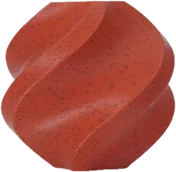 Specialty PLAWood, marble and glow in the dark PLA |
Hardened nozzle for glow | Decor with texture or glow | |||||
 Tough PLAPLA+ and Tough PLA |
Nothing special | Household parts, wearable props | |||||
 PETGPolyethylene terephthalate glycol |
Textured plate or glue stick | Useful parts, water, warm spots | |||||
 TPUThermoplastic polyurethane, 95A |
Slow speeds, external spool | Cases, bumpers, gaskets, grips | |||||
 ABSAcrylonitrile butadiene styrene |
Enclosure, ventilation | Tough indoor parts, car interiors | |||||
 ASAAcrylonitrile styrene acrylate |
Enclosure, ventilation | Outdoor parts, car parts | |||||
 PETG-CFCarbon fiber PETG |
Hardened nozzle | Stiff brackets, mounts, jigs | |||||
 Nylon CFCarbon fiber nylon (PA-CF, PAHT-CF) |
Enclosure, hardened nozzle, dry box | Gears, high heat, under the hood | |||||
 PCPolycarbonate |
Enclosure, dry box, hot bed | Very tough, heat resistant parts | |||||
 LW-PLALightweight foaming PLA |
Temperature tuning | RC planes, light helmets |
Ratings compare filaments with each other and assume a typical spool from a good brand. Within a type, brands differ, so the spool label always wins.
The best filament for beginners: PLA
PLA is where almost everyone should start. It prints at 200 to 220 °C, barely warps, needs no enclosure and is cheap, at about $15 to $20 a spool. It also comes in the widest range of colors and finishes. Matte PLA hides layer lines, silk PLA has a metallic shine, and wood, marble and glow in the dark versions add texture. The PLA guide covers settings and common problems.
PLA has two weak spots. It softens at about 55 °C, so it deforms in a hot car or a sunny window, and it is fairly brittle. Tough PLA, often sold as PLA+, fixes most of the brittleness with the same easy printing.
PLA vs PETG: which should you use?
Use PLA for decor, toys, gifts, figures and prototypes that stay indoors. Use PETG for useful parts: hooks, clips, brackets, planters and anything near water or somewhere warm. PETG softens at around 70 °C, bends a little before it breaks, and lasts a few years outdoors.
The trade-offs are small. PETG prints hotter (230 to 260 °C), strings more, and sticks so hard to smooth PEI that it can rip the surface, so print it on a textured plate or with a thin layer of glue stick. The PETG guide has tuned settings.
Best filament for outdoor use and car parts
ASA is the best filament for anything that lives outside. It resists UV light, rain and heat, so garden parts, mounts and signs keep their strength and color for years. It is also the right choice for car parts in direct sun, like dashboard mounts and phone holders, because it holds its shape to around 95 to 100 °C.
ASA, and the closely related ABS, need an enclosed printer to stop them warping, and should be printed in a ventilated room. On an open printer, PETG is the best you can do: it handles a few years outside, longest in black, and works in a car out of direct sun. Never use PLA for outdoor or car parts. The ABS and ASA guide explains the details.
Best filament for strong, functional parts
For most strong parts, start with PETG. If you want stiffer, more stable parts like brackets and jigs, PETG-CF adds carbon fiber and a beautiful matte finish, and only needs a hardened steel nozzle. On an enclosed printer, ABS is tough and handles heat. For the hardest jobs, like gears, high-load brackets and parts near engines, carbon fiber nylon (PA-CF or PAHT-CF) and polycarbonate (PC) are the strongest filaments most home printers can run. They need an enclosure and a carefully dried spool. See the engineering materials guide.
How you print matters as much as what you print with. Parts are weakest between layers, so turn them so the layers run along the load, and add walls before you add infill.
Best flexible filament: TPU
TPU 95A is the flexible filament to start with. It feels like a firm phone case and works for bumpers, gaskets, grips, watch straps and RC tires. It prints best slowly on a direct drive printer. Feed it from the external spool holder, because most automatic spool changers, like the Bambu Lab AMS and Creality CFS, can't handle soft TPU. Less infill makes a softer, squishier part. The TPU and flexibles guide has more.
Best filament for cosplay and props
Most cosplay is printed in PLA, because it is easy to print, sand, prime and paint. For armor and props that get worn and bumped, Tough PLA bends a little instead of cracking. Matte PLA hides layer lines, so there is less sanding before paint. Silk PLA gives a metallic look with no paint at all. For big helmets you have to wear all day, LW-PLA foams as it prints and can weigh less than half as much. If your props ride in a hot car to a convention, consider PETG or ASA. Pieces that are too big for your printer can be cut into parts with the free 3D Model Splitter.
Hardened nozzles, enclosures and drying
Do you need a hardened steel nozzle?
Only for abrasive filaments: carbon fiber (CF), glass fiber (GF), glow in the dark and some sparkle filaments. They wear out brass and stainless steel nozzles quickly. A hardened steel nozzle costs about $15 to $30, and it prints regular filaments just fine too.
Do you need an enclosure?
For ABS, ASA, nylon and PC, yes. They shrink as they cool, and an enclosure keeps the air around the print warm so parts don't warp or split. PLA, PETG and TPU don't need one. On an enclosed printer, open the door or lid for PLA so the hotend stays cool and doesn't clog from heat creep.
Do you need to dry filament?
PLA is usually fine from a sealed bag. PETG, TPU, ABS and ASA print better dry, especially once a spool has been open for a few weeks. Nylon and PC should be dried before every print. Damp filament pops, strings and prints weaker parts. The filament drying guide lists times and temperatures for each material.
Frequently asked questions
What filament should a beginner use?
Start with PLA. It prints at low temperatures (about 200 to 220 °C), barely warps, needs no enclosure and comes in every color for about $15 to $20 a spool. Once you have a few prints done, PETG is the natural next filament for parts that need to be tougher or handle heat and water.
PLA vs PETG: which should I use?
Use PLA for decor, toys, gifts and anything that stays indoors. It is easier to print and shows finer detail. Use PETG for useful parts that take stress, get wet or sit somewhere warm: it softens at around 70 °C instead of about 55 °C for PLA, bends before it breaks and lasts a few years outdoors. PETG prints hotter, strings a little more and sticks very hard to smooth PEI plates, so use a textured plate or a thin layer of glue stick.
What is the best filament for outdoor use?
ASA. It resists UV light, rain and heat, so parts keep their strength and color for years outside. It needs an enclosed printer and a ventilated room. On an open printer, PETG is the best option and lasts a few years outside, longest in black. Avoid PLA outdoors, because it softens in the sun and breaks down over time. ABS handles heat but yellows and turns brittle in sunlight.
Can I leave PLA prints in a hot car?
No. PLA starts to soften at about 55 °C, and a car parked in the sun gets hotter than that inside, especially on the dashboard. PETG softens at around 70 °C, which is fine for parts out of direct sun such as cup holders and clips. For dashboard mounts and anything in direct sun, use ASA, which holds its shape to around 95 to 100 °C.
What is the strongest 3D printer filament?
For home printers, carbon fiber nylon (PA-CF or PAHT-CF) and polycarbonate (PC) are the strongest and most heat resistant. Both need an enclosed printer and a well dried spool, and carbon fiber also needs a hardened steel nozzle. For most strong parts, PETG or PETG-CF are much easier and plenty strong. How you print matters as much as the material: more walls and the right orientation often beat a fancier filament.
Do I need a hardened steel nozzle?
Only for abrasive filaments: anything with carbon fiber (CF) or glass fiber (GF), glow in the dark, and some sparkle filaments. They wear out brass and stainless steel nozzles quickly. A hardened steel nozzle costs about $15 to $30 and prints normal filaments just fine too.
Do I need an enclosure to print ABS or ASA?
Yes, realistically. ABS and ASA shrink as they cool, so on an open printer parts warp, crack between layers or pop off the bed. An enclosure keeps the air around the print warm. Print them in a ventilated room, because they give off more fumes than PLA or PETG. PLA, PETG and TPU do not need an enclosure, and on an enclosed printer you should open the door or lid for PLA so the hotend stays cool.
What is the best flexible filament?
TPU with a 95A Shore hardness is the best place to start. It is soft enough for phone cases, bumpers, gaskets and grips, and firm enough to print reliably on most direct drive printers. Print it slowly from the external spool holder, because most automatic spool changers, like the Bambu Lab AMS and Creality CFS, can't feed soft TPU.
Is 3D printer filament food safe?
Treat 3D printed parts as not food safe. Even when the plastic itself is food grade, the tiny gaps between layers trap bacteria, and nozzles, colorants and additives are not certified. Cookie cutters used briefly with dough are a common exception. For cups, plates or anything you reuse, coat the print in a food-safe epoxy or buy the item instead.
Do I need to dry filament?
PLA is usually fine straight from a sealed bag. PETG, TPU, ABS and ASA print better after drying, especially once a spool has been open for a few weeks, because damp filament pops, strings and prints weaker. Nylon and PC should be dried before every print and ideally fed from a dry box. A filament dryer costs about $40 to $70.
How up to date are these picks?
The filaments and prices were last checked in October 2026 using official US store prices for one spool, usually 1 kg. Filament goes on sale often, and Bambu Lab discounts orders of several spools, so check the current price before you buy.
Still not sure?
Take the quiz. It takes about 30 seconds, and you can change any answer on the result to see how the pick changes.
Find my filament