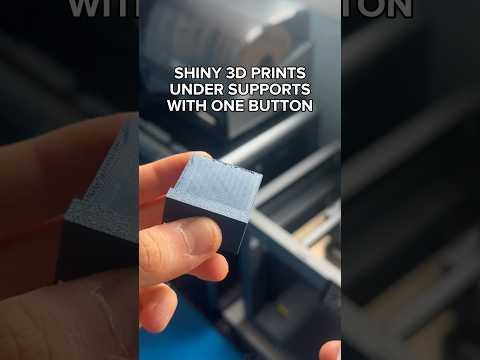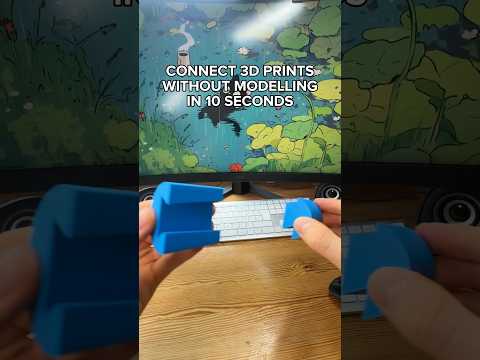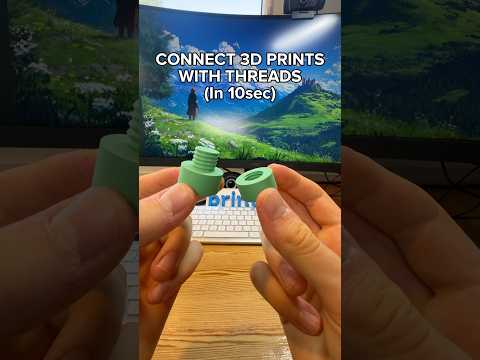
About this video
What Is Gyroid Infill?
Gyroid infill is a slicer setting that fills the inside of a 3D printed part with a repeating, wave-like lattice structure. Unlike traditional grid or honeycomb patterns, the gyroid uses a continuous curved path that flows smoothly through all three axes. This unique geometry is one of the most efficient infill patterns available in modern slicers like Cura, PrusaSlicer, and Bambu Studio.
Why Choose Gyroid Over Other Infill Patterns?
The gyroid infill pattern is popular among makers who want maximum strength without adding weight. Because its geometry distributes stress evenly in every direction, it delivers the same mechanical strength as denser patterns while using noticeably less filament. Other key advantages include:
- Material savings — less filament used per print, lowering cost
- Lighter parts — ideal for weight-sensitive applications
- Reduced warping — the continuous path minimizes internal stress
- Less nozzle clogging — smooth curves avoid sharp retractions that can cause jams
Best Use Cases for Gyroid Infill
Gyroid shines when you need a functional 3D printed part that is both strong and light. Common applications include:
- Drone bodies, frames, and arms
- RC car chassis and mounts
- Mechanical brackets and load-bearing components
- Functional prototypes and jigs
- Lightweight enclosures for electronics
If you are designing a part where every gram matters but strength cannot be compromised, gyroid is one of the best infill patterns to choose.
Trade-offs to Consider
While gyroid is excellent for strength-to-weight, it does come with a few downsides worth knowing:
- Longer slicing times — the complex geometry takes more processing power
- Noisy and shaky prints — the rapid direction changes can cause vibration
- Reduced transparency — not ideal if you want a see-through aesthetic
Tips for Printing with Gyroid Infill
- Use 15–25% infill density for most functional parts
- Pair with a sturdy printer frame to minimize vibration
- Print at slightly slower speeds to reduce noise
- Works especially well with PLA, PETG, and nylon
FAQ
Is gyroid stronger than cubic or grid infill?
Yes, gyroid typically offers better multi-directional strength at the same density, making it stronger than grid or cubic patterns.
What infill percentage should I use with gyroid?
For most mechanical parts, 15–25% is enough. Increase to 30–40% for heavily loaded components.
Does gyroid use more filament than other patterns?
No — it usually uses less filament while delivering equal or greater strength.